
The Role of User-Centric Design in Product Development Services
Product development services accelerate innovation, optimise processes, and reduce time-to-market for startups and enterprises alike. Our expert teams collaborate across disciplines, delivering strategic insights, rapid prototyping, and scalable solutions. For a deeper partnership, explore the resources and capabilities at https://forward-npd.com/.
User-centric design has emerged as a cornerstone of successful product development in today’s competitive landscape. For organisations engaging in development of new product or seeking to optimise existing offerings, placing users at the heart of the process—from initial discovery through to delivery and iteration—can deliver tangible business benefits. This approach is not merely about aesthetics or usability; it is a strategic framework that integrates customer insight, technical feasibility, and commercial viability to guide decision-making across the product lifecycle.
Understanding users as a foundational asset is essential for new product development companies aiming to reduce risk and accelerate time-to-market. In practice, user-centric design begins with a deep dive into the problems and needs faced by real people. Ethnographic research, usability testing, and feedback loops enable teams to identify genuine pain points, uncover latent needs, and prioritise features that deliver the most value. When combined with robust market analysis, this insight informs the development of new product concepts that stand a higher chance of resonating with target audiences.
The symbiotic relationship between user insights and technical feasibility is central to effective product development consultancy. Engineering talent and design thinking must operate in concert to translate user requirements into viable solutions. This often involves rapid prototyping, where low-fidelity models are used to explore ideas, gather user feedback, and iterate quickly. By validating concepts early, organisations can mitigate the risk of pursuing technically elegant but commercially misaligned features. For npd new product development, this iterative discipline is crucial, enabling teams to course-correct before substantial resources are committed.
Collaboration across disciplines is another pillar of user-centric product development. Product development outsourcing has evolved from a purely execution-focused model to a holistic partnership that emphasises user empathy, governance, and measurable outcomes. When external teams or product development companies adopt a user-centric mindset, they become co-owners of the user journey, aligning engineering milestones with customer value. This alignment helps ensure that each stage of the product development consultancy engagement contributes directly to improving user satisfaction, market fit, and business metrics such as adoption rates and lifetime value.
Designers and researchers play complementary roles in shaping product strategies. User experience design focuses on how users interact with the product, while user interface design translates those interactions into intuitive interfaces. Yet the value of user-centric design extends beyond raw usability. It informs branding, messaging, and the overall perception of the product in the marketplace. A strong, coherent user experience can differentiate a product in crowded markets, influencing buying decisions and fostering long-term loyalty. For new product development companies, this means investing in a design system and a cohesive interaction model that scales across platforms and touchpoints.
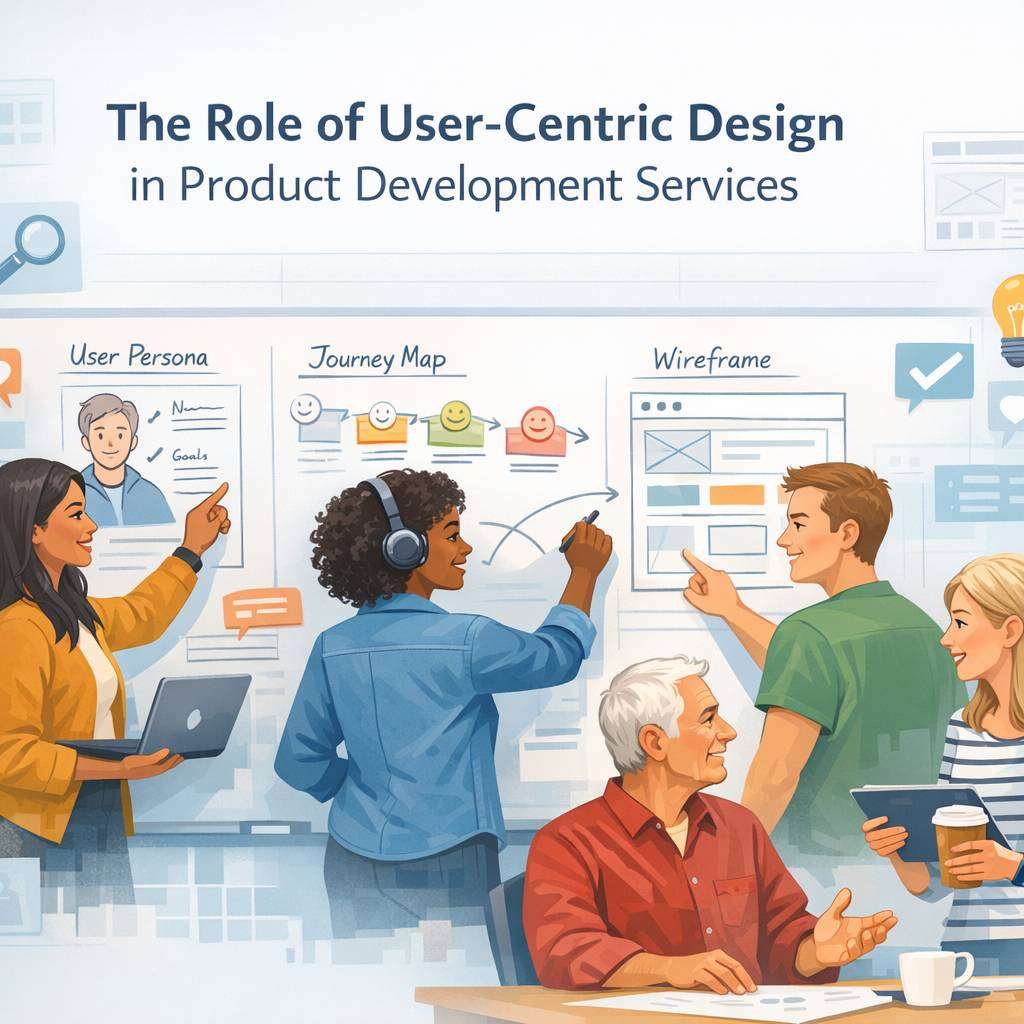
A user-centric approach also drives prioritisation and roadmapping. By mapping user journeys, teams can identify critical pain points and moments of delight, which in turn signal where to invest time, money, and effort. This helps avoid feature bloat and ensures that the development of new product is guided by a clear value proposition. When prioritisation is anchored in user value, the resulting roadmap tends to be more focused, with a higher probability of delivering meaningful improvements in user satisfaction and commercial performance.
Incorporating accessibility and inclusivity is fundamental to responsible product development. A user-centric framework recognises that a diverse user base will interact with the product in different ways. By designing for accessibility from the outset—considering visual, auditory, motor, and cognitive needs—product development consultancy teams can broaden the potential audience and reduce the risk of exclusion. This not only fulfils ethical and regulatory expectations but also expands market reach, a consideration that is particularly relevant for new product development companies seeking scalable growth.
Data and analytics play a critical role in validating the user-centric narrative. While qualitative insights from interviews, surveys, and usability tests illuminate user needs, quantitative data from analytics, cohort studies, and A/B testing provide objective measures of impact. When integrated into a single evidence base, these inputs guide product decisions with greater confidence. For organisations offering product development outsourcing or engaging in npd new product development projects, establishing clear success metrics early on ensures that every decision contributes to measurable outcomes such as improved conversion rates, reduced churn, or increased engagement.
organisational culture and leadership support are decisive in realising the benefits of user-centric design. A culture that promotes curiosity, rapid experimentation, and constructive feedback sustains momentum across the development timeline. Leaders who champion user-centric principles encourage teams to challenge assumptions, welcome negative findings, and stay anchored to the user value proposition. For new product development consulting engagements, shaping this culture is as important as the tactical processes used to capture user needs and translate them into features.
The role of ethics in user-centric design cannot be overstated. Respect for user data, transparent consent practices, and consideration of privacy implications are essential as products collect ever more information. Ethical design decisions foster trust, which translates into higher adoption and retention. When product development companies integrate ethical guidelines into their processes, they build durable relationships with users and reduce the risk of reputational damage.
In conclusion, user-centric design is not optional but essential in modern product development services. It reframes the development of new product as a collaborative endeavour where user needs inform strategy, design, and delivery. By combining user research, rapid prototyping, cross-disciplinary collaboration, accessibility, data-driven validation, and ethical considerations, organisations can deliver products that not only meet market demands but also delight users and sustain long-term value. Whether operating as standalone entities or partnering through product development outsourcing or new product development consulting, a steadfast commitment to the user perspective elevates outcomes and differentiates companies in a crowded competitive landscape.