
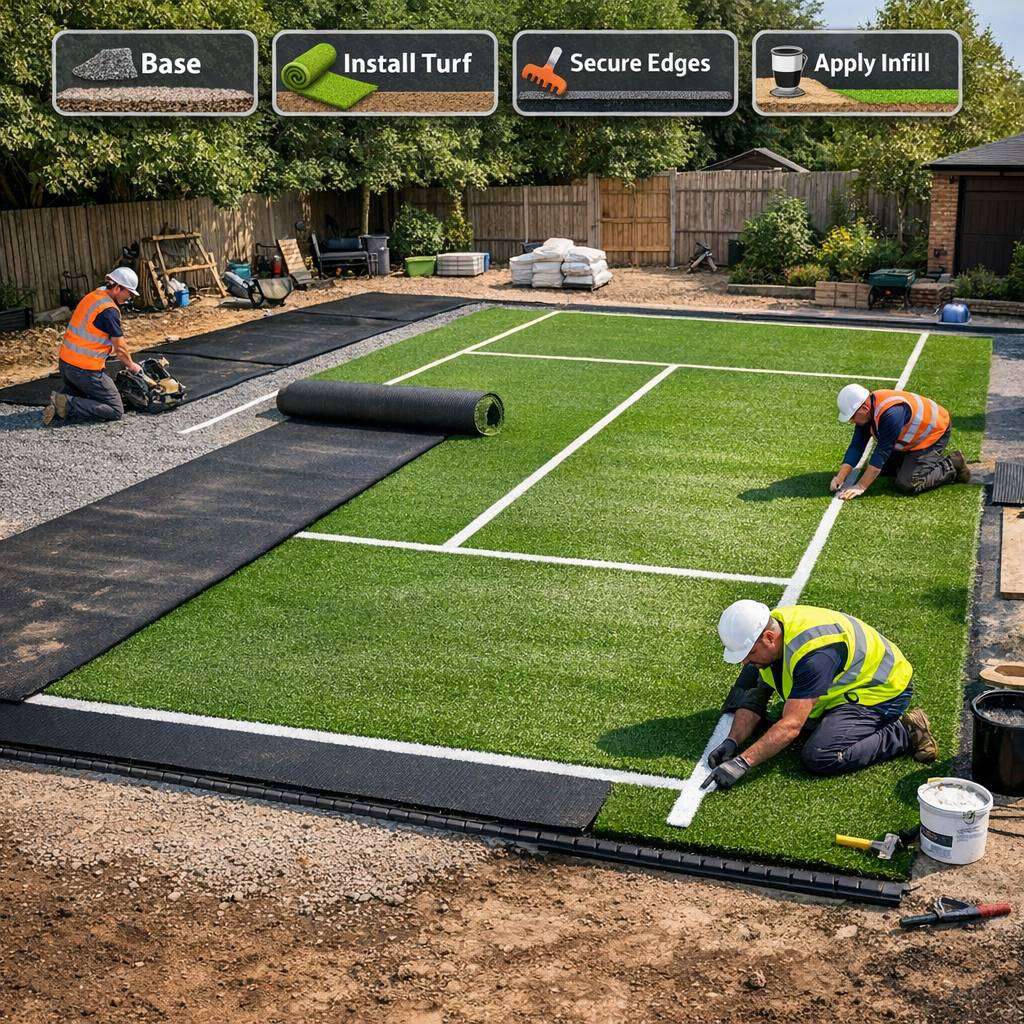
How to Install an Artificial Grass Tennis Court: A Step-by-Step Guide
Embarking on the installation of an artificial grass tennis court is a substantial endeavour, yet with careful planning and adherence to best practices, you can create a durable surface that delivers reliable play for years. This guide walks you through the essential stages of the process, highlighting practical tips to optimise performance, longevity, and maintenance.
Planning and Design
Before any shovel meets soil, establish clear objectives for your tennis court installation. Consider site constraints such as drainage, orientation to maximise sun exposure, and proximity to existing structures. Select a high-quality artificial grass tennis court surface that offers a true bounce, appropriate pile height, and a finished appearance that suits your venue. Evaluate underlay materials, infill options, and the overall system build to ensure compatibility with your climate and usage patterns. A well-conceived plan reduces the risk of post-installation issues and minimises tennis court maintenance demands over time.
Site Preparation
Effective site preparation is fundamental to a successful installation. Begin by marking the court outline precisely to accreditation standards or your bespoke dimensions. Excavate to a stable sub-base, removing organic material and debris. The sub-base should be compacted to create a solid, level foundation. In regions subject to heavy rainfall, implement a robust drainage strategy—typically a perforated drainage layer beneath the sub-base coupled with edge ducting to prevent water accumulation. A clean, well-drained site is essential for consistent ball bounce and to avert puddling that can compromise play and longevity.
Sub-Base and Drainage
A reinforced sub-base, usually comprising crushed stone or grade 6F material, is laid in layers and compacted with a mechanical roller. The aim is a stable, even surface that resists movement under repeated foot traffic and ball impacts. Integrated drainage channels or perforated pipes can be embedded to facilitate rapid water removal. Ensure the final level is within strict tolerances to preserve a uniform playing surface. Proper sub-base preparation underpins the entire tennis court installation, reducing long-term tennis court repairs and resurfacing needs.
Damp-Proof and Vapour Barriers
In damp climates or on sites with moisture concerns, a damp-proof membrane or vapour barrier may be required between the sub-base and the underlay. This barrier mitigates capillary rise and protects the sub-layer from moisture intrusion, which can cause deformation of the surface fibres and swelling of components. The barrier should be compatible with the chosen artificial grass system and installed according to manufacturer guidelines to guarantee warranty coverage.
Underlay Installation
The underlay provides structural support and impact absorption, contributing to a balanced and comfortable playing experience. Lay the underlay material in seamless sheets or battens, ensuring edge joins are staggered to avoid sawtooth patterns underfoot. Secure the underlay to the sub-base using appropriate fixings or adhesive methods as specified by the manufacturer. A well-installed underlay reduces fibre flattening and helps maintain consistent ball bounce, contributing to tennis court maintenance efficiency.
Artificial Grass Selection and Laying
Choose an artificial grass product designed for tennis play, with a pile height and fibre shape crafted for reliable ball bounce and durability. Roll the artificial grass onto the prepared base, aligning seams precisely and ensuring a tight, tension-free lay. Secure the edges with non-corrosive fasteners and heat-weld between seams to create a uniform surface. After laying, perform a thorough glide and backfold to smooth wrinkles, then brush the fibres into an upright position to optimise aesthetics and play characteristics. Proper installation of tennis court artificial grass is fundamental to achieving consistent performance and reducing the need for early tennis court repairs.
Infill and Fibre Care
Infill materials, commonly silica sand or a specialised anti-matting infill, are distributed evenly across the surface to weigh fibres upright and support ball bounce. Apply the infill using a calibrated distribution system to ensure uniform depth. After spreading, broom the surface or use a mechanical brushing machine to work the infill into the fibre structure. The right infill level is crucial; too little can lead to poor fibre recovery, while too much can impede ball release and alter play characteristics. Regular incidentals of tennis court maintenance include monitoring infill levels and reapplying as necessary to preserve surface performance.
Edge Finishing and Perimeter Details
Perimeter detailing involves installing edging, borderline fencing, and access gates that align with safety regulations and local planning requirements. A neat perimeter not only enhances aesthetics but also assists in keeping debris away from the playing surface, reducing tennis court cleaning demands. Ensure drainage around the perimeter is unhindered and that the edge fixedings do not constrain surface movement or fibre response.
FAQ: Artificial Grass Tennis Court
What is an artificial grass tennis court?
An artificial grass tennis court is a synthetic surface designed to mimic natural grass while providing consistent bounce, reduced maintenance, and year-round playability. It typically features a tufted synthetic grass layer over a backing with drainage and often includes a wear layer and infill.
How does an artificial grass tennis court differ from other surfaces?
Compared to hard courts, clay, or natural grass, artificial grass offers a smoother, more uniform ball bounce, quieter gameplay, and lower maintenance. It also provides better drainage than some surfaces and can be used in a wider range of weather conditions.
What materials are used in artificial grass tennis courts?
Common materials include tufted polyethylene or polypropylene fibers, a backing material with drainage channels, and infill such as cork, silica sand, or polymer-coated granules. The specific mix can affect ball bounce, footwear wear, and maintenance needs.
How long does an artificial grass tennis court last?
With proper installation and maintenance, an artificial grass tennis court can last 8–15 years or more. Longevity depends on usage, climate, maintenance frequency, and the quality of materials and installation.
What maintenance is required for an artificial grass tennis court?
Regular maintenance includes brushing to lift fibers, removing debris, periodic infill top-ups, and occasional power cleaning. Checks for drainage issues, seam integrity, and worn areas are important. A maintenance schedule helps preserve playability and surface life.
How is playability affected by weather?
Artificial grass provides good playability in a variety of weather conditions and generally dries quickly after rain. However, prolonged heavy rain can lead to surface moisture or softness in the infill, so proper drainage and maintenance are crucial.
Is an artificial grass court suitable for all levels of play?
Yes. Artificial grass courts are suitable for beginners to advanced players. The surface provides consistent bounce and safer footing, making it popular for clubs, schools, and residential courts. The feel can vary by fiber pile height and infill, so tests or sample boards are recommended.
What should I consider before installing an artificial grass tennis court?
Consider budget, intended usage, climate, required drainage, sub-base quality, fiber height, infill type, and ongoing maintenance. Also assess warranty, installation timing, and whether you’ll need a professional installer or can install as a DIY project.
How long does installation take?
Installation time varies with court size, site preparation, and climate. A typical residential court might take several days to a couple of weeks, including sub-base work, carpet laying, infill, and finishing touches.
How much does an artificial grass tennis court cost?
Costs vary widely based on size, location, materials, and site conditions. A rough range often includes sub-base and installation, but exact pricing requires a quote from a professional installer. Ongoing maintenance costs should also be considered.
Can I customise the surface for a particular level of play?
Yes. You can select pile height, fiber material, and infill type to influence ball bounce and speed. Some surfaces are designed for faster play, while others emphasise a more forgiving feel. Coordinate with the supplier to match your preferred play characteristics.
Are there safety or environmental considerations?
Look for lead-free pigments, non-toxic infill options, and proper drainage design to prevent water pooling. Recyclability of materials and the environmental impact of manufacturing are also considerations. Ensure proper installation to avoid trip hazards or loose edges.
What warranty should I expect?
Warranties vary by manufacturer and installer but commonly cover manufacturing defects in the surface and some components for 5–10 years. Check what is included (fibers, infill retention, drainage) and what voids the warranty.
Can I rent or lease an artificial grass tennis court?
Some clubs or facilities offer court access through memberships or leases. For personal properties, ownership typically involves installation and ongoing maintenance rather than rental, unless you’re using a shared facility.
How do I choose a professional installer?
Look for installers with proven experience in artificial grass tennis courts, client references, proper licensing and insurance, and samples or demonstrations of finish. Request a written quote detailing materials, sub-base work, installation steps, and warranty.
Surface Conditioning and Brushing
Once the surface is installed, perform an initial conditioning regime to align fibres and promote an even bounce. Use a stiff-bristled brush or a powered brushing machine to lift fibres to an upright position. This step, sometimes referred to as nap setting, assists in achieving consistent play across the court. Routine tennis court maintenance thereafter includes regular brushing to prevent matting, especially in high-traffic zones or after wet periods.
An artificial grass tennis court offers durable, low-maintenance play with consistent bounce and all-weather reliability. Ideal for clubs and homes seeking year-round practice, it reduces dust and mud while delivering atrue lawn look. For expert installation and resurfacing services, explore professional options. www.artificialgrassmaintenance.co.uk
Drainage Testing and Final Checks
Carry out a drainage test to verify that surface water drains away promptly, preventing standing water and surface degradation. Inspect seams, edges, and fixing points for secure placement, and confirm that there are no loose fibres or uneven patches that could impact play. Address any anomalies promptly to avoid long-term deterioration and expensive tennis court resurfacing later in the lifecycle.
Cleaning and Ongoing Maintenance
Ongoing tennis court maintenance is essential for longevity. Implement a scheduled cleaning routine to remove debris, leaves, and dust, which can accumulate and affect surface feel and ball behaviour. Use appropriate cleaning methods to avoid damaging fibres or infill. Periodic maintenance should also address wear patterns, with targeted attention to high-use areas. If the surface becomes particularly worn or damaged, plan for tennis court repairs or consider resurfacing to restore play quality and extend the surface’s life.
Maintenance and Repairs Strategy
Establish a maintenance programme that includes regular inspections, brushing, infill checks, and timely repairs. Keep a log of wear, damage, and service actions to guide proactive interventions. When necessary, undertake resurfacing or targeted repairs to maintain consistent play and safety. A robust tennis court maintenance plan minimises the need for frequent tennis court installation changes and maximises the return on your investment.
By following these steps and adhering to manufacturer guidelines, you’ll create a high-quality artificial grass tennis court that delivers dependable performance. From initial planning and sub-base preparation to infill distribution and ongoing maintenance, each stage contributes to a surface that stands up to rigorous use while remaining relatively straightforward to maintain. Whether you’re upgrading an existing facility or installing a new tennis court, a well-executed project emphasises longevity, safety, and enjoyable play for years to come.